
Introduction
A vehicle’s exterior is one of the most noticeable aspects of its overall condition, and maintaining a flawless finish plays a significant role in both aesthetics and value retention. Over time, even well-maintained vehicles develop imperfections such as swirl marks, light scratches, oxidation, water spots, and holograms caused by improper washing techniques, environmental exposure, and general wear. These imperfections can dull the appearance of the paint and reduce its reflective clarity. This is where paint correction becomes an essential detailing process for restoring the original depth, gloss, and smoothness of automotive paintwork.
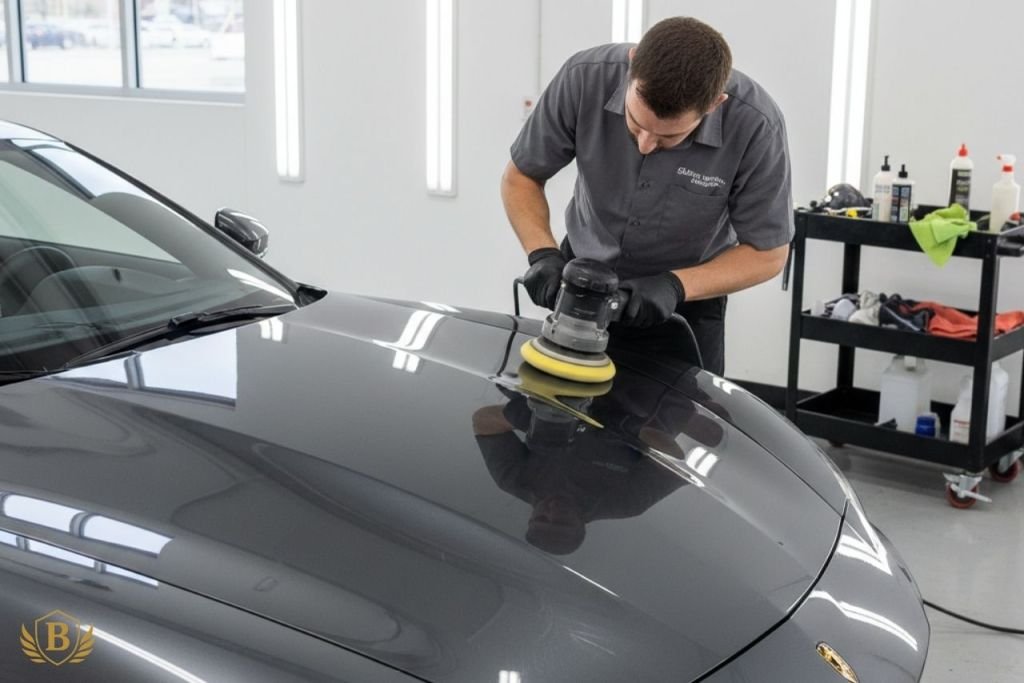
Paint correction is a meticulous, multi-stage process that removes or reduces surface defects by carefully leveling the clear coat using specialized polishing compounds and machine tools. Unlike simple waxing or surface cleaning, it addresses imperfections within the paint itself rather than masking them temporarily. The result is a dramatically improved finish that restores a “like-new” appearance and enhances the overall visual impact of the vehicle.
Understanding Automotive Paint Layers
To understand how paint correction works, it is important to first understand the structure of automotive paint. Most modern vehicles have a multi-layer paint system consisting of a primer, base coat, and clear coat.
The primer provides adhesion and corrosion resistance. The base coat contains the actual color pigment of the vehicle. The clear coat is the outermost layer that provides gloss, depth, and protection against environmental damage.
Most imperfections occur in the clear coat layer, which is why paint correction focuses on refining this surface without compromising the underlying color layer. Since the clear coat is only a few microns thick, precision and control are critical during the correction process.Paint correction involves the controlled removal of a very thin layer of clear coat to eliminate or reduce visible defects. This is achieved through machine polishing using abrasive compounds that gradually refine the surface.
The process does not “fill in” scratches or defects. Instead, it levels the surrounding clear coat until the surface becomes uniform, reducing the visibility of imperfections. This creates a smooth surface that reflects light evenly, resulting in a deep, glossy finish.Depending on the severity of the defects, paint correction can range from light polishing to multi-stage cutting and finishing processes.
Common Paint Defects Addressed
Vehicles are exposed to many environmental and human-induced factors that contribute to paint damage over time.Swirl marks are one of the most common defects and are usually caused by improper washing techniques, such as using dirty sponges or automatic car washes.
Fine scratches can result from contact with debris, dust, or accidental brushing against the surface.Oxidation occurs when paint is exposed to sunlight and air over time, causing fading and dullness.Water spots are caused by mineral deposits left behind after water evaporation.Holograms or buffer trails are often the result of poor machine polishing techniques.A proper paint correction process effectively reduces or eliminates these defects, restoring clarity and depth.
Paint correction is typically performed in multiple stages depending on the condition of the paint.The first stage, often called “cutting,” involves using a more abrasive compound and pad combination to remove deeper defects. This stage levels the surface but may leave behind slight haze.The second stage, known as “polishing,” refines the surface further, removing haze and improving clarity.
The final stage, “finishing,” enhances gloss and ensures a perfectly smooth, reflective surface.Not every vehicle requires all three stages. A professional paint correction assessment determines the appropriate level of correction needed.
Tools and Materials Used
Paint correction requires specialized tools and materials to achieve safe and effective results.Dual-action polishers are commonly used because they provide controlled motion and reduce the risk of damaging the paint. Rotary polishers are more powerful and typically used for heavier correction work.Polishing pads come in different levels of abrasiveness, from heavy cutting pads to ultra-soft finishing pads.
Compounds and polishes contain abrasive particles that break down during use to refine the paint surface.Paint thickness gauges are often used to measure clear coat depth before and during correction to ensure safety.A professional paint correction process relies heavily on proper tool selection and technique.
The process begins with a thorough wash to remove dirt and contaminants from the vehicle’s surface. This is often followed by a clay bar treatment to remove embedded particles that washing cannot eliminate.Next, the surface is inspected under specialized lighting to identify defects and assess paint condition.
Test spots are performed to determine the correct combination of pad and polish.The correction process is then carried out section by section, ensuring even coverage and consistent results.After correction, the surface is wiped down to remove residue and inspected again for clarity and uniformity.This careful, methodical approach ensures that paint correction delivers consistent, high-quality results.
Importance of Surface Preparation
Proper preparation is one of the most critical steps in paint correction. Any dirt or contamination left on the surface can cause additional scratches during polishing.
Decontamination ensures that the polishing process works on a clean surface, reducing the risk of further damage.Masking sensitive areas such as rubber trims and plastic components prevents accidental staining or damage during correction.Without proper preparation, even skilled paint correction work can produce suboptimal results.
One of the most significant benefits of paint correction is improved visual appearance. The vehicle’s paint regains depth, clarity, and reflectivity, making it look significantly newer.It also enhances the effectiveness of protective coatings such as wax or ceramic coatings, which bond better to smooth, defect-free surfaces.Paint correction can also increase resale value by improving the vehicle’s overall presentation.
Additionally, it provides long-term protection by removing contaminants that may contribute to further deterioration.A properly executed paint correction process transforms the appearance of a vehicle in a way that simple cleaning cannot achieve.
Risks and Considerations
While paint correction is highly effective, it must be performed carefully. Since the process involves removing a layer of clear coat, excessive polishing can reduce paint thickness and long-term durability.Improper technique can also create uneven surfaces, haze, or additional swirl marks.Vehicles with thin or previously corrected paint require extra caution.For these reasons, professional assessment is essential before performing paint correction on any vehicle.
After correction, proper maintenance is necessary to preserve the finish. Regular hand washing using safe techniques helps prevent new swirl marks.Using microfiber towels and pH-neutral cleaning products reduces the risk of scratching.
Applying protective coatings such as wax, sealants, or ceramic coatings helps maintain gloss and protect the corrected surface.Avoiding automatic car washes also helps preserve results.Consistent care ensures that paint correction results last as long as possible.
Difference Between Paint Correction and Detailing
Paint correction is often confused with general detailing, but they are not the same process.Detailing typically focuses on cleaning, polishing, and protecting the vehicle’s exterior and interior surfaces.
Paint correction specifically targets defects in the paint’s clear coat and involves more intensive polishing work.While detailing enhances appearance, paint correction fundamentally restores paint quality at a deeper level.
Paint correction not only improves aesthetics but also contributes to long-term vehicle preservation. By removing surface defects, it prevents contaminants from settling into damaged areas.When combined with protective coatings, it helps maintain a high-gloss finish for extended periods.This makes it a valuable investment for vehicle owners who prioritize appearance and resale value.
Conclusion
Paint correction is a highly specialized process designed to restore automotive paint to its highest possible level of clarity, gloss, and smoothness. By carefully removing surface imperfections from the clear coat, it revitalizes the vehicle’s appearance and enhances its overall value.
When performed correctly and followed by proper maintenance, paint correction delivers long-lasting visual improvement and protection. It is not simply a cosmetic enhancement but a detailed restoration process that brings out the true depth and brilliance of automotive paintwork.For anyone seeking to preserve or elevate the appearance of their vehicle, paint correction remains one of the most effective and transformative detailing services available.
