
Introduction and Market Relevance
Across Canadian workshops, garages, and industrial maintenance facilities, tool organization directly affects productivity. Disorganized tools waste time and increase frustration during repairs. A stainless steel tool chest cabinet provides dedicated storage for hand tools, power tools, and accessories. Canadian mechanics, contractors, and serious DIY enthusiasts use these cabinets to keep tools accessible and protected.
A clean, organized workspace also presents a professional image to customers. For automotive shops and service centers, visible organization signals competence and attention to detail.
Common Applications and Storage Design
Tool chest cabinets are commonly used for:
- Automotive repair tool organization
- Industrial maintenance equipment storage
- Woodworking and metalworking tool management
- Electrical and plumbing tool organization
- Contractor mobile tool storage
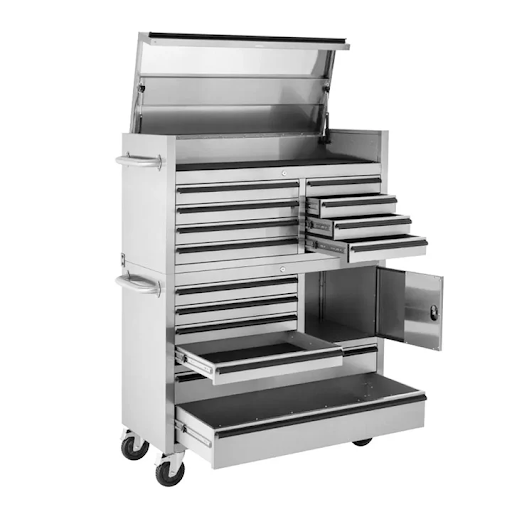
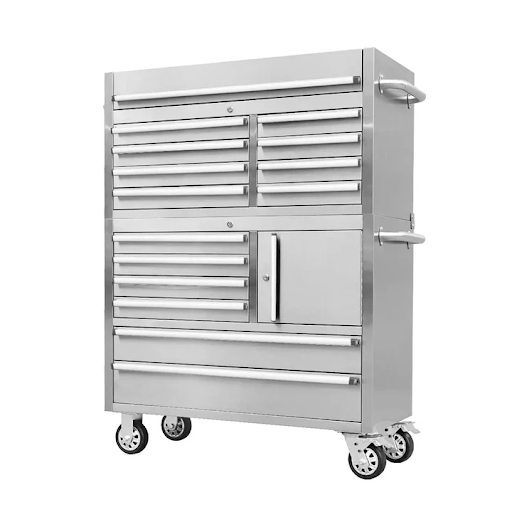
The cabinet features 14 drawers across two sections. The top chest contains 8 drawers for smaller hand tools such as wrenches, sockets, and screwdrivers. The bottom cabinet includes 6 drawers plus a storage compartment for larger items like power tools and tool kits. The 41 inch width provides ample surface space for tool staging during repairs.
Material Durability and Workspace Efficiency
430 anti-fingerprint stainless steel resists smudges and maintains a clean appearance even after handling with oily or greasy hands. This finish is particularly valuable in automotive shops where technicians frequently touch drawer fronts. The stainless construction also resists corrosion from workshop chemicals and moisture.
Organized storage reduces tool search time significantly. When each tool has a designated drawer, technicians can retrieve and return items in seconds rather than minutes. For a shop performing multiple repairs daily, these time savings add up to increased revenue opportunities.
Drawer Operation and Mobility Features
Ball-bearing drawer slides rated at 100 pounds operate smoothly even under full loads. This capacity allows storing heavy tool sets without drawer binding. The gas springs in the top chest lid provide controlled opening, preventing sudden drops.
Key factors affecting cabinet performance:
- Drawer weight distribution
- Caster condition and floor surface
- Lock security for tool protection
- Drawer slide lubrication
Four 6 inch casters allow repositioning the cabinet within the shop. Two locking casters prevent movement when positioned at a work bay. Tubular side handles provide gripping points for maneuvering.
Security and Maintenance Best Practices
Tool theft from workshops is a legitimate concern. The cabinet includes two flat keys for locking drawers, preventing unauthorized access after hours. For shops with multiple employees, locking drawers ensure that specialty tools remain in designated locations.
Safe cabinet use requires several key practices:
- Lock casters before opening drawers
- Open only one drawer at a time
- Distribute heavy items evenly
- Lock cabinet at end of each shift
- Keep keys in secure location
Maintenance includes cleaning stainless surfaces with mild detergent, lubricating drawer slides annually, checking caster bolts for tightness, and verifying lock operation. Drawer liners protect tool finishes and reduce sliding noise.
Advantages and Limitations
Advantages of a stainless steel tool chest include:
- 14 drawer storage capacity
- Anti-fingerprint stainless steel finish
- 100 pound drawer slide rating
- Gas spring lid for safe opening
- 4 caster wheels for mobility
- Locking drawers for security
Limitations to consider:
- Heavy when fully loaded
- Requires floor space
- Drawer slides need occasional lubrication
- Stainless surface shows scratches
- Keys must be tracked
Real-World Application Example
A Canadian automotive repair shop in Ontario had technicians sharing toolboxes, leading to misplaced tools and wasted time. The owner purchased stainless steel tool chests for each technician. Each mechanic organized their specialty tools in designated drawers. Tool search time dropped from 5 minutes per repair to 30 seconds. The anti-fingerprint finish kept cabinets looking professional despite daily use.
Conclusion and Future Outlook
TMG Industrial Stainless steel tool chest cabinets provide Canadian workshops with durable, organized tool storage that improves productivity. The combination of 14 drawers, 100 pound slides, and anti-fingerprint finish makes these cabinets suitable for daily professional use. As workshops continue focusing on efficiency, demand for organized tool storage will likely remain strong. Future designs may include integrated power strips, USB charging ports, and soft-close drawer mechanisms.
Workshop managers should evaluate stainless steel tool chests for any facility requiring organized tool access. The 41 inch width and 14 drawer configuration make this cabinet suitable for diverse Canadian workshop applications.
