Search results for “limb lengthening surgery Turkey price” tend to show a range and very little else. That range exists because the phrase covers several quite different operations. Before any figure means something, you need to know which plan it describes: which bone, how many centimetres, which device and whether you are looking at one operation or two.
This guide walks through those choices, what each one changes for your body and your time, and what a written plan should state so you can compare offers fairly. For current package prices, see the reference page listed under Sources below.
The Plan Comes Before the Number
Cosmetic limb lengthening usually works on one pair of bones at a time, either the thighs (femurs) or the shins (tibias). The surgeon divides the bone, waits a few days for healing to begin, then separates the two ends gradually while new bone forms in the gap. Afterwards, that new bone needs months to harden before it can take your full weight.
Every part of that sequence depends on the plan. The bone you choose affects how fast lengthening can proceed, how your muscles and joints respond and how long you need close supervision. Your target length decides how many weeks the lengthening phase lasts. Together, those choices change operating time, implant selection, the length of your stay and the amount of physiotherapy you need, which is why two quotes can differ widely while appearing to describe the same surgery.
Femur Lengthening: A Common Starting Point
Many centres that work with internal nails now start with the femur, often citing better muscle tolerance and a larger typical gain than the tibia offers.
What to know:
- Your knee is the joint to protect. Physiotherapy during femoral lengthening focuses on preventing a knee flexion contracture, where the knee gradually loses the ability to straighten fully.
- Lengthening often proceeds at about 1 mm a day. In an early published series using a magnetic internal nail, femurs were lengthened at 1 mm a day after a five-day wait.
- Your proportions change in the thigh. Your upper leg becomes longer relative to your lower leg, which some people prefer and others do not.
Tibia Lengthening: A Different Set of Trade-Offs
Lengthening the shin is a well-established option, and it featured in every study included in one major review of cosmetic lengthening. It comes with its own challenges.
- The calf is the pressure point. The main calf muscles cross both the knee and the ankle, so as the tibia lengthens they can pull the foot downwards and the knee into a bent position. A systematic review in Bone & Joint Research, covering 795 patients, found that this downward pull on the foot, called equinus, was the most common problem and obstacle.
- Lengthening may run more slowly. In the same early nail series, tibias were lengthened at 0.75 mm a day after a seven-day wait, which extends the lengthening phase for the same target.
- Healing needs close watching. The review also found that bending of the new bone after treatment and stiffness in the joint just below the ankle were among the most common complications.
- Your proportions change below the knee. A longer shin alters the look of your lower leg, so ask how your surgeon plans for this.
Both Segments: More Height, More of Everything
Some people ask about lengthening both the femur and the tibia to reach a larger total gain. Centres that offer this usually stage it, with the second operation several months after the first. The reasoning is sound, because soft tissues need time to recover between stages, but the consequences are easy to underestimate:
- Two operations, two lengthening phases and two consolidation periods
- More time away from work and daily life, often spread across well over a year
- A higher cumulative risk of problems than a single stage carries
- Two rounds of travel, accommodation and rehabilitation to organise
Ask whether the second stage is priced now or later, and what happens to that plan if the first stage does not go smoothly.
The Device Follows the Bone
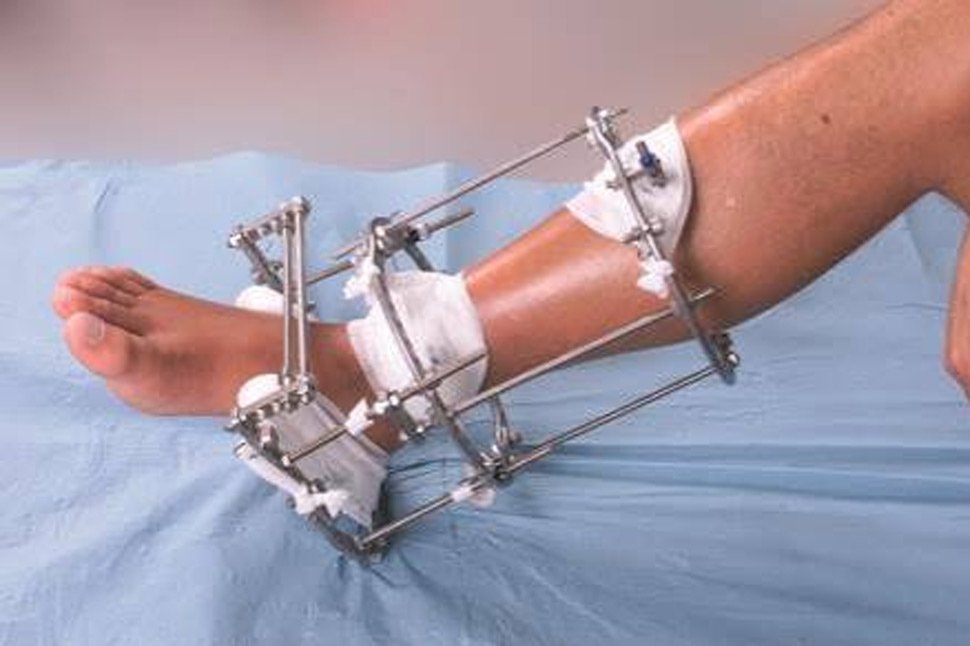
Method and implant matter, but they should follow your anatomy and your chosen segment rather than preference alone. Internal magnetic nails need a bone canal wide enough to hold them, and patients usually have to limit how much weight they put through the leg until the new bone is strong enough. Methods that combine a nail with a temporary external frame, or rely on an external frame alone, bring their own trade-offs in comfort, pin-site care and time spent wearing hardware.
A meta-analysis published in late 2024, comparing external fixation with internal nails for cosmetic lengthening, concluded that both are viable. Internal nails showed a safer profile with fewer complications, while external fixation still achieved high patient satisfaction. Whatever you choose, ask why that device suits your bone specifically.
What Your Written Plan Should State
Before comparing offers, make sure each one describes the same things:
- The segment or segments to be lengthened, and the target for each
- The method, the implant or frame, and any alternatives that were ruled out
- The expected lengthening rate and how long you will need to stay nearby
- How often you will have physiotherapy and X-rays during that time
- Whether a second stage, a frame removal or a later nail removal is included
- Which follow-up reviews happen after you return, and who looks at your images
- The complication and revision terms, and the scope of the complication cover that Turkish health tourism rules now require
Turning a Plan Into a Fair Comparison
Once each offer is written against the same plan, you can set any limb lengthening surgery Turkey price you receive against what it actually covers. A lower figure for a tibial plan is not a saving if the femur was the better choice for your body, and a quote for one stage tells you little if you are really planning two.
Start with your anatomy, agree the plan with a surgeon who has reviewed your standing X-rays, and only then compare totals. That order protects your health first and your budget second, which is the right way round for an operation whose result you will live with for the rest of your life.
Medical disclaimer: Nothing in this guide is personal medical advice. Limb lengthening is major elective surgery with real risks, and the right plan can only be decided by an orthopaedic surgeon after a full assessment.
Sources
- Current limb lengthening prices in Turkey (price reference): https://livetallernow.com/limb-lengthening-surgery-turkey/
- Cosmetic stature lengthening: systematic review of outcomes and complications, Bone & Joint Research: https://pmc.ncbi.nlm.nih.gov/articles/PMC7342054/
- PRECICE magnetically driven intramedullary lengthening nail: pre-clinical testing and first 30 patients: https://www.ncbi.nlm.nih.gov/pmc/articles/PMC5962966/
- Meta-analysis of complications and functional outcomes in cosmetic limb lengthening: https://www.sciencedirect.com/science/article/abs/pii/S0972978X24004409