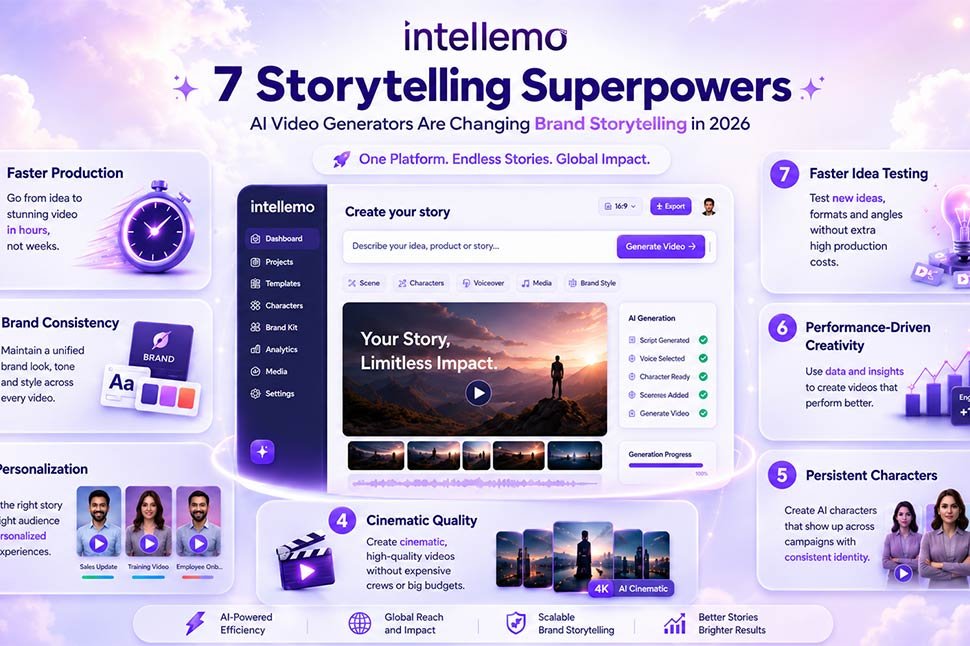
Brand storytelling is always about grabbing attention and keeping them for a longer period till they gain trust in you. In 2026, the tools used to do that have shifted dramatically. AI video generators are no longer a novelty; they are now integral to the core of marketing processes around the world. Brands already leveraging them are generating a lot more content, of a higher quality and in much less time than ever before, just two years ago.
This is not a trend that is slowing down. It is revolutionising brand communication, competition and audience engagement in all channels. Here are 7 ways shifts are happening now.
1. Production Timelines Have Shrunk From Weeks to Hours
In the traditional video production process, there need to be a production team, location selection, shooting days and post-production editing. It may take the length of three to four weeks for a short brand film from start to finish. However, this was no longer the standard for brands leveraging AI video generation tools.
With today’s marketing teams, you can turn a written brief into a polished video in as little time as a few hours. There are tools such as Intellemo AI that are designed for this level of speed, such as adding a character, entering context, and creating video output that looks like a film without any cameras or editing suites. The starting point can even be as light as a rough idea or a link to your existing website, and the platform carries it through to a finished video on its own. Brands who want to capitalise on cultural moments, seasonal campaigns, or the speed of trends can truly make a difference with this fast speed.
2. Visual Consistency Across Every Campaign Is Now the Default
Ever since the beginning of brands, one of the quiet challenges has been how to maintain their brand image across various pieces of content. Variations in shoots, editors and budgets creep up over time and strip away brand recognition.
This is where AI storytelling video generation comes into play. Every video output is automatically given the same visual DNA; built into the generation process, brand colours, character styles and visual tone are included. From a 10-second social spot to a two-minute explanatory video, the viewer’s journey is consistent with the brand. Some platforms now take the guesswork out of that first step. When you hand Intellemo AI your website URL, it reads the site, picks up brand details such as your logo, and uses that context to shape the script and the visuals. The video starts from your actual brand instead of a generic template, which makes staying on-brand far less of a manual job. One of the key elements of establishing brand trust over the long haul is consistency, which AI can help you keep easier than ever, without having to step in.
3. Personalised Video Content Is No Longer a Luxury
Until now, personalised video marketing was reserved for big enterprise brands with big budgets for technology. When audiences consisted of multiple groups, a significant Resource investment and specialised dynamic video platforms were needed for multiple releases of the same video.
That’s all changed now with AI video generators. Brands can now create personalised versions of the same story for various audiences or different points in the customer’s journey or even target different regions without having to create a piece from scratch. It takes just one video to reach the audience that has no experience with the fitness brand, and a different one to reach the audience that has experience. This type of ‘adaptive storytelling’ is no longer a luxury in 2026 but an expectation.
4. Cinematic Quality Is No Longer Reserved for Big Budgets
Until recently, video production quality has been directly linked to budget. The bigger brands may be able to generate film production. Small companies and independent artists would not be able to.
This divide is now more closed. AI video generators can now create impressive video content that will keep you on the scroll, without relying on lighting rigs, location permits or post-production teams. Part of what makes that possible is that the whole production stack now sits inside one project. With Intellemo AI, for example, a single video run can cover the parts that used to need separate hires and separate software:
- Script and scene planning
- Voice and narration
- AI music matched to the scene
- Lip-sync and final sound
Music is the piece worth flagging on its own. Getting a soundtrack that actually fits used to mean a separate tool or a licensing hunt. Building it into the same process means the final cut arrives with sound that suits the scene, not a stock track laid over the top. Platforms focus on the concept that all brands, no matter how big or small, can develop content that will grab people’s attention and keep them from moving on to the next page. This is an effective competitive leveller for small and medium businesses. It can free up creative team time and effort for strategy and ideation instead of production logistics for bigger brands.
5. Character-Led Storytelling Can Now Scale Across Campaigns
The key to a successful brand story is human connection. The issue has always been, creating videos at scale requires a lot of manpower and skills that are expensive and complicated. There are significant overheads in booking talent, coordinating schedules and visual uniformity with a long campaign.
As a result of AI video generation, a new term has come into play: “persistent AI characters”. These are brand-aligned characters that can be seen again and again in several campaigns, across platforms and content types, without the scheduling and cost of hiring human talent. This paints a picture that was not out there before, in a narrative sense. A brand can create a character that can be developed in multiple content pieces over the course of time, engaging audiences and increasing investment over time. More like serial storytelling than ads, in fact, and people respond to it accordingly.
6. Content Output Can Be Driven by Performance Data, Not Just Instinct
The biggest change in 2026 is likely the shift of AI to the entire marketing stack, beyond production. AI video generators are not standalone solutions. They increasingly can tie in to performance metrics that come from past campaigns, so they can make creative decisions based on what the team has seen perform in the past and not on what they think will perform.
Once the creative brief can be optimised for a shorter video based on the problem solution structure and it has been found to perform better than longer narrative videos for a certain segment, it does not need to be rewritten in every instance. This takes the brand storytelling more toward a feedback loop than a one-way broadcast. Based on audience feedback, stories get better and better, making each campaign even sharper than the previous.
7. The Barrier Between Having an Idea and Testing It Has Almost Disappeared
The psychological impact of AI-generated videos on brand stories might be the most significant one. With high time and budget requirements for producing a video, creative teams eliminated many ideas before they ever went to test. With the production bottleneck came a natural conservatism in the approach to the content brands take.
The game changes when it gets to an extremely low cost to test a creative idea. Brands can experiment with new formats, tones, storylines and audience strategies without risking a campaign budget for a single execution. This helps build up a higher floor and ultimately a higher creative ceiling. The best brand stories in 2026 are not going to be those of the richest brands. These are coming from the teams that are the most open to experimentation.
The Bottom Line
AI video generation is not replacing human creativity in brand storytelling. It is removing the friction that prevented most creative ideas from ever being executed. For marketing teams that want to move faster, reach broader audiences, and tell richer stories without scaling their headcount, the tools are already here, and they are already being used by competitors.
The brands winning attention in 2026 are not necessarily the ones with the biggest production budgets. They are the ones that have understood what AI video generation actually unlocks: the freedom to tell better stories, more often, without the traditional cost of doing so. That shift is still in its early stages, and the gap between brands that have adopted it and those that have not is only going to widen from here.
Frequently Asked Questions
Are AI-generated videos good enough quality for professional brand campaigns?
Yes, the best AI video generators have now produced video quality that’s good enough for professional brand campaigns, social media advertising, and digital marketing in 2026. Whether it’s for promoting a product or service, marketing videos offer a more comprehensive solution than their AI counterparts, especially when it comes to platforms like Intellemo AI that are built for creating video content that looks more like a movie.
How do AI video generators help smaller brands compete with larger ones?
Large brands had an advantage in terms of production quality until the emergence of AI video generators, which have eliminated this cost differential. Smaller brands will now be able to create polished, coherent video content at a lower cost than that of the traditional production, enabling them to offer as much creative quality as a budget. This has enabled video marketing to be used by firms that were used to only static content or that produced video marketing content on a shoestring budget.
Can AI video generators produce personalised content for different audience segments?
Yes. An important benefit of AI video creation in 2026 is the capability of creating various iterations of a primary video for various audience segments, markets, or campaign phases. Today, brands aren’t starting from scratch to create each version; they can come up with variations quickly by using a single creative brief, making personalised video marketing viable and affordable for teams of all sizes.
SEO
Meta Title
7 Ways AI Video Generators Are Changing Brand Storytelling in 2026
Meta Description
Discover how AI video generators are transforming brand storytelling in 2026 with faster production, personalized videos, cinematic quality, and smarter marketing.
URL Slug
7-ways-ai-video-generators-changing-brand-storytelling
H1:
7 Ways AI Video Generators Are Changing Brand Storytelling in 2026
H2:
1. Production Timelines Have Shrunk From Weeks to Hours
2. Visual Consistency Across Every Campaign Is Now the Default
3. Personalised Video Content Is No Longer a Luxury
4. Cinematic Quality Is No Longer Reserved for Big Budgets
5. Character-Led Storytelling Can Now Scale Across Campaigns
6. Content Output Can Be Driven by Performance Data, Not Just Instinct
7. The Barrier Between Having an Idea and Testing It Has Almost Disappeared
The Bottom Line
Frequently Asked Questions
Image Alt Tag:
“AI video generation platform showing seven storytelling superpowers for brand campaigns “