
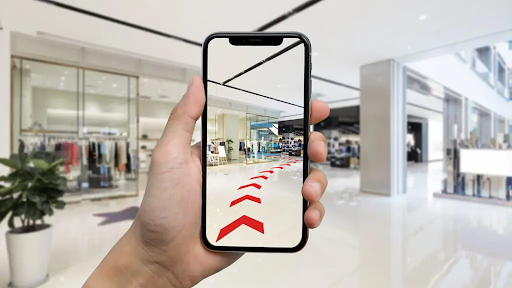
In today’s digital world, people expect seamless navigation wherever they go. While GPS technology works exceptionally well outdoors, it often struggles inside buildings due to signal interference from walls, ceilings, and other structures. This challenge has led to the rapid development of the indoor navigation system, a technology designed to help people accurately find their way inside complex indoor environments. Indoor navigation solutions are transforming industries such as healthcare, retail, logistics, transportation, and smart buildings by providing precise positioning and guidance where traditional GPS cannot operate effectively.
What Is an Indoor Navigation System?
An indoor navigation system is a technology platform that enables users to determine their location and navigate within enclosed spaces such as shopping malls, airports, hospitals, warehouses, office buildings, and exhibition centers. Unlike outdoor navigation systems that rely on satellite signals, indoor navigation uses alternative technologies such as Bluetooth beacons, Wi-Fi positioning, Ultra-Wideband (UWB), RFID, and inertial sensors to provide accurate location information. (Minew)
The primary goal of an indoor navigation system is to simplify navigation in large or complicated indoor spaces. By providing real-time location tracking and turn-by-turn directions, these systems help users reach their destinations quickly and efficiently.
How an Indoor Navigation System Works
An indoor navigation system operates through a combination of positioning technologies and digital mapping. First, a detailed map of the building is created, including rooms, hallways, entrances, elevators, staircases, and points of interest. The system then determines the user’s location using signals from installed infrastructure such as Bluetooth beacons, Wi-Fi access points, or UWB anchors
Once the user’s position is identified, navigation software calculates the optimal route to the desired destination. Directions can be displayed through mobile applications, digital kiosks, or augmented reality interfaces, providing an intuitive user experience.
Key Technologies Behind Indoor Navigation Systems
Bluetooth Beacon Technology
Bluetooth Low Energy (BLE) beacons are among the most popular technologies used in an indoor navigation system. These small devices continuously transmit signals that nearby smartphones can detect. By measuring signal strength from multiple beacons, the system can estimate the user’s location with reasonable accuracy. Bluetooth beacons are cost-effective, energy-efficient, and relatively easy to deploy.
Wi-Fi Positioning
Wi-Fi positioning utilizes existing wireless network infrastructure to estimate user locations. Since many buildings already have Wi-Fi coverage, organizations can often implement navigation services without significant additional hardware investments. Wi-Fi-based indoor navigation systems are commonly used in offices, airports, universities, and commercial buildings.
Ultra-Wideband (UWB)
For environments requiring extremely high accuracy, UWB technology provides positioning precision down to centimeters. This makes UWB ideal for industrial facilities, healthcare environments, and asset tracking applications where exact location information is critical.
Inertial Navigation
Modern smartphones contain accelerometers and gyroscopes that can track movement and direction. These sensors allow an indoor navigation system to estimate user movement even when external positioning signals are weak or unavailable. Inertial navigation is often combined with other technologies to improve overall accuracy.
Benefits of an Indoor Navigation System
Improved Visitor Experience
Large buildings can be confusing for visitors. An indoor navigation system helps users find stores, offices, departments, or facilities without getting lost. This improves customer satisfaction and reduces frustration.
Enhanced Operational Efficiency
Businesses can use indoor navigation to optimize workflows and improve resource allocation. Employees spend less time searching for locations, equipment, or inventory, leading to increased productivity.
Better Accessibility
Indoor navigation systems can provide voice guidance and step-by-step directions for individuals with visual impairments or mobility challenges. This creates a more inclusive environment for all users.
Real-Time Analytics
Organizations can collect valuable insights about visitor movement patterns, traffic flow, and space utilization. These analytics help improve facility management and business decision-making.
Applications of Indoor Navigation Systems
Healthcare Facilities
Hospitals often have complex layouts that can be difficult for patients and visitors to navigate. An indoor navigation system helps people locate clinics, departments, laboratories, and patient rooms quickly, reducing stress and improving efficiency.
Airports and Transportation Hubs
Travelers can use indoor navigation systems to find gates, baggage claim areas, restaurants, lounges, and transportation services. This improves the passenger experience and reduces congestion.
Retail and Shopping Centers
Shopping malls use indoor navigation technology to help customers find stores, products, and promotions. Retailers can also leverage location-based marketing to increase engagement and sales.
Warehouses and Logistics
An indoor navigation system can guide workers to inventory locations, optimize picking routes, and improve asset tracking. This leads to greater operational efficiency and reduced costs.
Museums and Exhibition Centers
Visitors can navigate exhibits more easily while accessing interactive content and personalized tour recommendations based on their location.
Challenges of Indoor Navigation Systems
Despite their many advantages, indoor navigation systems face several challenges. Signal interference from walls, furniture, and crowds can affect positioning accuracy. Building layouts may change over time, requiring map updates and maintenance. Additionally, achieving high precision often requires additional infrastructure investments.
However, ongoing advancements in wireless communication, artificial intelligence, and sensor technology continue to improve system performance and reliability.
Future of Indoor Navigation Systems
The future of the indoor navigation system looks promising. Emerging technologies such as AI, machine learning, augmented reality, and IoT integration are expected to significantly enhance indoor positioning accuracy and user experiences. Future systems will provide smarter route recommendations, predictive analytics, and seamless integration with connected devices and smart building infrastructure.
Conclusion
An indoor navigation system is rapidly becoming an essential technology for modern buildings and smart environments. By enabling accurate indoor positioning and real-time wayfinding, these systems improve visitor experiences, enhance operational efficiency, and support digital transformation initiatives across industries. As technology continues to evolve, indoor navigation systems will play an increasingly important role in creating smarter, more connected indoor spaces.
