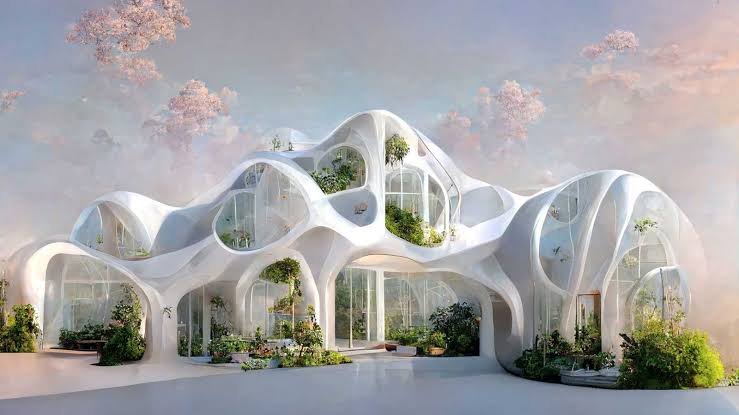
Architecture is experienced through time as much as through space. You move through a building; you discover it sequentially; the experience unfolds. A floor plan compresses that temporal experience into a single static document. A photograph freezes a moment of light in a room that exists across all times of day and all seasons. Neither fully communicates what it actually feels like to be in a space.
Video comes closer — a walkthrough, a time-lapse of light moving across a surface, a fly-through of an unbuilt project rendered in three dimensions. And music in that video is part of what makes the experience of the space legible before the viewer has visited or can visit. The right music under a portfolio video makes the space feel inhabitable rather than merely visible. The wrong music makes a beautiful building feel like a real estate listing.
Most architectural practices treat music in their portfolio videos as a production checkbox handled at the end of the editing process. AI music tools make it a design decision treated with the same intention as the visual elements of the presentation.
Music That Comes From the Architecture, Not the Library
The most common approach to music in architectural portfolio videos is picking from a library of “sophisticated” or “minimal” tracks that feel appropriate for design content without actually relating to any specific project. The result is a visual presentation where the architecture is specific and intentional and the audio is generic and borrowed — a disconnect that reduces the overall communicative power of the work.
An ai song generator free generates original music from a description of the specific project and its spatial and emotional qualities. “Raw concrete, high ceilings, natural light from a single direction, the feeling of a thinking space” for a studio. “Soft materials, layered transparency, the quality of light filtered through screens, quiet intimacy” for a residential interior. “Public scale, movement through, arrival and departure, the city present but held at a distance” for a cultural building’s public spaces. Each description produces music that was built around that specific spatial experience rather than borrowed from a general aesthetic category.
For architects whose practice has a strong conceptual identity — whose buildings are built around specific ideas about materiality, program, or urban relationship — music generated from those conceptual terms creates audio that’s philosophically consistent with the work rather than decorating it from the outside.
Transforming Presentation Music for Different Audiences
Architectural work is presented to different audiences in different contexts: a competition jury, a client, a developer, a planning board, a public audience, an award submission. Each audience brings different expectations and responds to different registers of presentation. A competition jury expects conceptual rigor and design intelligence; a property developer needs to feel commercial potential; a planning board needs to understand civic responsibility; a public audience needs to feel welcome.
An ai song cover generator offers a practical tool for adapting a core portfolio piece across these different contexts. Establish a core musical identity for a project — music that captures the architecture’s essential qualities — and reinterpret it in different styles or with different emotional registers for different presentation contexts. The same project’s music can be more austere and conceptual for a competition submission and more warm and accessible for a community consultation, while retaining enough melodic connection to feel like it belongs to the same project.
This is the audio equivalent of how architects adjust the visual register of a presentation for different audiences — the same drawings, but how they’re presented shifts based on who’s in the room. Music that can shift in the same way makes the overall presentation package more strategically considered.
The Architect’s Voice in Promotional Video Content
Architectural practices and individual architects who maintain a public presence through social media, YouTube, or a professional content operation face a specific challenge: how to make the practice’s philosophy and approach audible rather than just visible. Design thinking is usually communicated through images and words; rarely through sound.
An ai singing video generator creates a specific opportunity for architectural content creators who want to give their practice a more personal sonic signature. Train a voice model from recorded vocals, apply it to original or generated music, and produce content where the practice’s voice — literal or figurative — is present in the audio alongside the visual presentation of the work. For architects who are also public thinkers and communicators, content where their voice is part of the music as well as the narration creates a more integrated personal brand.
For student portfolios and emerging practices particularly, where the goal is to stand out from a large field of technically competent work, original audio that reflects a distinct point of view is one of the most accessible ways to demonstrate that the practice has a position beyond competence — that there’s a specific intelligence and sensibility present in how the work thinks about space.
Competition Submissions and Award Entries
Architectural competitions increasingly accept video submissions alongside or instead of traditional drawing sets. The video format gives competition judges a more immediate sense of how a proposal would feel to inhabit — but it also requires audio that supports the design argument rather than undermining it.
Competition music needs to be confident without overselling, atmospheric without being vague, and specific enough to the proposal that it feels like part of the argument rather than decoration. Music generated from the project’s conceptual brief — the same ideas and language that drive the design — achieves that integration in a way that library music rarely does.
For practices that compete regularly, having a reliable workflow for generating project-specific music for competition videos removes a production friction that often gets resolved badly under deadline pressure. The audio becomes part of the design process rather than an afterthought added in the final hours before submission.