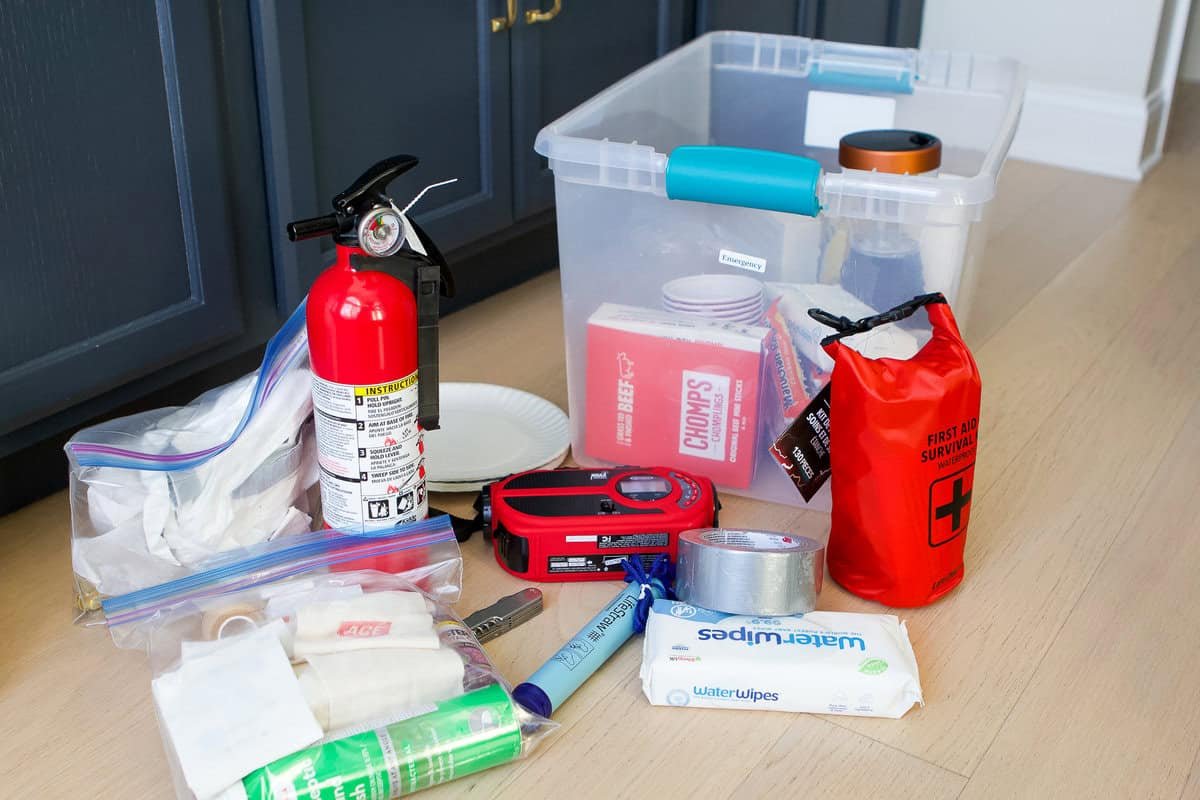
Power cuts, flooding, severe storms and problems with water or communications can happen with little warning. While most disruptions are short-lived, a longer outage can quickly become difficult to manage.
That is why UK households are increasingly being encouraged to think about how they would cope if essential services were unavailable for a few days. Having some basic supplies set aside can make a big difference.
The UK Government’s Prepare campaign recommends thinking in advance about what you might need during an emergency lasting several days. That could include a prolonged power cut, a water outage, being asked to stay at home or having to leave at short notice.
Britain’s infrastructure is generally resilient, but even a relatively local incident can cause wider problems. Most power cuts do not last long, but larger outages can continue for days. A loss of electricity can also affect heating systems, broadband, mobile communications and, in some cases, water supplies.
The principle is simple: a little preparation beforehand can make an emergency far easier to deal with.
Water and food come first
Drinking water should be one of the first things to think about.
UK preparedness guidance suggests keeping at least around 2.5 to 3 litres of drinking water per person, per day, for basic survival needs. More may be needed if you also want enough for cooking and washing.
Some households will need considerably more. Babies, pets and people using certain types of medical equipment may all require additional supplies.
For a household planning for three days without normal services, that can add up to a substantial amount of bottled water, so it is worth storing it before it is needed.
Food is equally important. The most useful emergency foods are generally long-lasting items that can be eaten with little or no preparation.
Tinned meat, fruit and vegetables, cereal bars, crackers, dried fruit and other ready-to-eat foods can all be useful. If you are storing tins, make sure there is a manual tin opener in the kit as well.
Families with young children should think about baby food or ready-to-feed formula. Pet owners should also keep enough food and water for their animals.
What should be in a household emergency kit?
An emergency kit does not need to be elaborate. Its main purpose is to give you access to the basics if normal services are temporarily unavailable.
A useful household kit might contain:
- Bottled drinking water
- Non-perishable, ready-to-eat food
- A battery-powered or wind-up torch
- Spare batteries
- A battery-powered or wind-up radio
- A portable power bank for phones
- A first-aid kit
- Hand sanitiser and wet wipes
- Warm clothing and emergency blankets
- Essential prescription medicines
- Copies of important documents
- Important telephone numbers written on paper
- A whistle for attracting attention
- A manual tin opener and simple multi-purpose tools
- Any supplies needed for babies, older relatives or pets
The Government recommends using a torch rather than candles during a power cut because of the lower fire risk.
A battery-powered or wind-up radio can also be surprisingly useful. If broadband, television or mobile networks are unavailable, radio broadcasts may still provide important local information and official updates.
Do not rely entirely on your mobile phone
For many of us, a smartphone now doubles as a torch, radio, map, address book, camera and wallet.
That is convenient in everyday life, but it also means a lot depends on one battery-powered device.
During a prolonged outage, home broadband will normally stop working unless the router has backup power. Mobile phone networks can also be affected if local masts lose electricity or become overloaded.
A fully charged power bank is therefore a sensible addition to any emergency kit, but it should not be your only backup. A separate torch and radio give you alternatives if your phone battery runs flat.
It is also worth writing down important telephone numbers rather than keeping them only on your phone.
In England, Scotland and Wales, the number for reporting a power cut is 105. In Northern Ireland, the relevant number is 03457 643643.
Think about a grab bag as well
Not every emergency means staying at home.
In some situations, households may be advised to leave quickly. For that reason, it can be useful to keep some essential items together in a bag that can be picked up at short notice. Government guidance sometimes refers to this as a “grab bag”.
This can be particularly helpful for people living in areas at risk of flooding.
Useful items can include medication, a first-aid kit, copies of important documents, a torch, bottled water, waterproof clothing and any baby-care essentials.
The bag itself should be sturdy, easy to carry and, ideally, reasonably weather-resistant. Important documents and electronics can also be stored inside waterproof pouches.
Building a kit yourself – or buying one ready-made
There is no need to buy an emergency kit all at once.
Many households will already own much of what they need, such as a torch, blankets, a first-aid kit and a portable charger. Building a kit gradually can therefore be a perfectly practical approach.
The important thing is to make sure the equipment works, has not expired and is stored somewhere easy to reach.
For people who would rather have the main items assembled in advance, ready-made emergency kits are another option. Companies such as Get ReadySet sell pre-packed kits designed to bring a range of emergency supplies together in one place.
Its Duo Set, for example, is intended for two adults and includes emergency food and packaged drinking water, first-aid equipment, thermal protection, an emergency tent, water-purification tablets, lighting, whistles and a solar and hand-crank emergency radio with power-bank functionality. The contents are packed in a waterproof backpack, with the kit checked and packed in the Netherlands.
For someone who would prefer to buy much of the core equipment in one purchase, a ready-made 72-hour kit can therefore be a convenient starting point.
However, no commercial kit will cover every household’s needs.
Get ReadySet itself recommends adding extra water and shelf-stable food. Prescription medicines, baby supplies, pet food and other personal essentials will also need to be added separately.
Prepare for the people in your household
There is no such thing as a single emergency kit that works perfectly for everyone.
A healthy adult living alone will have very different needs from a family with a baby, someone who depends on prescription medication or a person who uses electrically powered medical equipment.
Parents may need nappies, baby food and ready-to-feed formula. Older people may need extra warmth, medication or mobility-related supplies. Pet owners need to make sure their animals are covered too.
People who rely on medical devices should also consider keeping printed instructions and charged backup batteries where appropriate.
Eligible households may also be able to join their energy or water provider’s Priority Services Register, which can provide additional support during interruptions to essential services.
Keep it somewhere you can actually find it
An emergency kit is not much use if everything is scattered around the house.
Ideally, the main supplies should be kept together in an accessible place that everyone in the household knows about. Check the kit from time to time, replace expired food or medicines, recharge power banks and make sure batteries and torches still work.
You do not need to prepare for every possible disaster. The aim is simply to make sure that if the lights go out, the water stops running or you need to leave home quickly, you are not starting from scratch.
A few basic supplies, organised in advance, can make an unexpected disruption much easier to handle.