
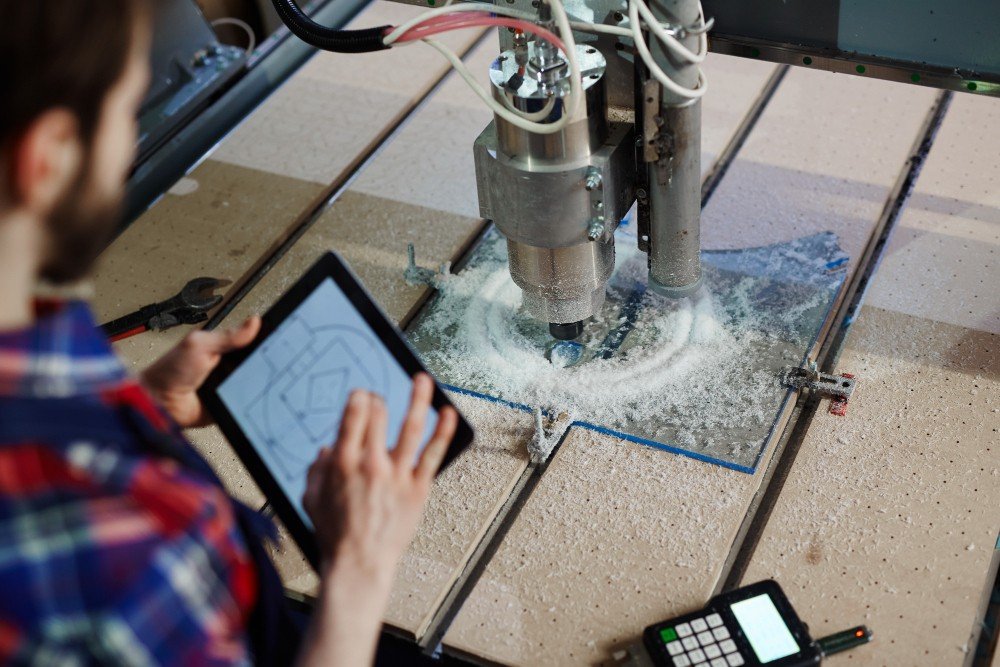
The landscape of production has been transformed by the introduction of advanced computer-controlled systems. Today, Computer Numerical Control, or CNC machinery, allows you to take a digital design and turn it into a physical reality with a level of detail that was impossible to achieve. This blog shares how this equipment enhances the reliability of the manufacturing process for your business or project.
Eliminating the Risk of Human Error
One of the advantages of using cnc machinery is that it removes the natural variability that comes with manual labour. You no longer have to worry about a worker becoming tired or losing focus, which can lead to tiny mistakes that ruin a perfectly good piece of material. Once the digital instructions are loaded into the system, the machine follows the same path with a mathematical precision that does not waver.
Achieving Unmatched Repeatability
When you need to produce hundreds or even thousands of identical parts, the ability to repeat the same process. You can be certain that the last item off the production line will be a replica of the first one, which is essential for quality control. This allows you to guarantee a uniform standard of quality to your customers, which builds a strong sense of trust and professionalism for your brand.
Handling Complex and Intricate Geometries
CNC machinery can move in several directions at once, allowing it to carve out curves and angles that would be a nightmare to attempt with traditional tools. You can push the boundaries of your product design, knowing that the equipment is capable of following your most creative and detailed blueprints. This opens up new possibilities from aerospace components to high-end automotive parts.
Maximising Material Efficiency and Reducing Waste
Precision manufacturing is about how efficiently you use your raw materials to get the job done. The software that controls CNC machines can calculate the most efficient way to nest parts onto a single sheet of metal to minimise the amount of leftover scrap. You will find that your material costs decrease over time because you are no longer losing valuable resources to manual cutting errors or poor planning.
Increasing Production Speed and Throughput
While a manual operator has to pause to check measurements and change tools, a CNC machine can run at high speeds. Many modern systems are equipped with automatic tool changers that swap out drill bits or cutters in just a few seconds. This means you can produce your parts much faster, allowing you to meet tight deadlines and take on more ambitious projects without increasing your staff numbers.
Enhancing Workplace Safety for Operators
By automating the most dangerous parts of the shaping process, you are creating a much safer environment for everyone working on your production floor. The high-speed cutting blades and drills are contained within a protected enclosure, which prevents sparks from reaching the person operating. You no longer need to have your hands anywhere near the moving parts, which reduces the risk of accidents.
Supporting Rapid Prototyping and Flexibility
The ability to quickly change your design and produce a new prototype is essential for staying ahead of the competition. With CNC machinery, you can simply update your digital file and run the machine again to see a physical version of your new idea within a matter of hours. This allows you to test out different iterations of a product and make improvements on the fly without having to build new manual jigs.
Shaping the Future of Precision Production
Embracing CNC technology allows you to achieve a level of manufacturing excellence that was once only a dream for traditional workshops. By focusing on precision, speed, and efficiency, you are building a process that is capable of meeting the highest standards of quality. Invest in the right machinery and the right training, and you will see your manufacturing capabilities reach heights of success.