
We have all experienced it recently: you click on a promising article or a well-titled blog post, only to find yourself reading paragraphs that are grammatically flawless but completely devoid of personality. It is the modern content creator’s paradox. We now possess the technology to draft a thousand words in mere seconds, yet we are struggling more than ever to actually say something meaningful.
As the internet becomes flooded with this synthetic, homogenized text, digital marketers and editorial teams are facing a massive wake-up call. The initial honeymoon phase of generative technology is over, and the focus has rapidly shifted from pure volume to genuine authenticity.
The Algorithm’s Push for Authenticity
For the past year, search engines have been aggressively updating their algorithms to filter out low-effort, mass-produced articles. Platforms like Google are heavily prioritizing the E-E-A-T framework—Experience, Expertise, Authoritativeness, and Trustworthiness. When an automated crawler detects the repetitive sentence structures and predictable vocabulary loops typical of raw machine output, the content is quickly devalued.
To maintain their organic traffic and protect their digital footprint, marketing teams are increasingly prioritizing the creation of undetectable ai content. It is crucial to understand that the goal here is not to maliciously deceive the reader. Rather, it is a defensive strategy to ensure that a brand’s hard work isn’t arbitrarily penalized by strict automated search filters just because a tool was used in the brainstorming or drafting phase.
The True Cost of Robotic Writing
Beyond the technical SEO implications, the real damage of robotic writing is psychological. Trust is the currency of the digital age. When a potential client or dedicated reader senses that a brand couldn’t be bothered to write to them with actual human empathy, that trust instantly evaporates.
Readers want varied pacing, conversational transitions, and the slight, charming unpredictability that comes from a real human mind. When these elements are stripped away, the resulting text feels like a sterile corporate manual. The challenge, therefore, is how to inject that warmth back into the text without reverting to the exhausting, time-consuming days of manual drafting from a blank page.
Bridging the Gap Without Breaking the Bank
This tug-of-war between operational efficiency and editorial quality has led to the rise of specialized text-refinement workflows. Instead of spending hours manually rewriting rigid paragraphs, forward-thinking agencies are turning to advanced structural editors that do the heavy lifting for them.
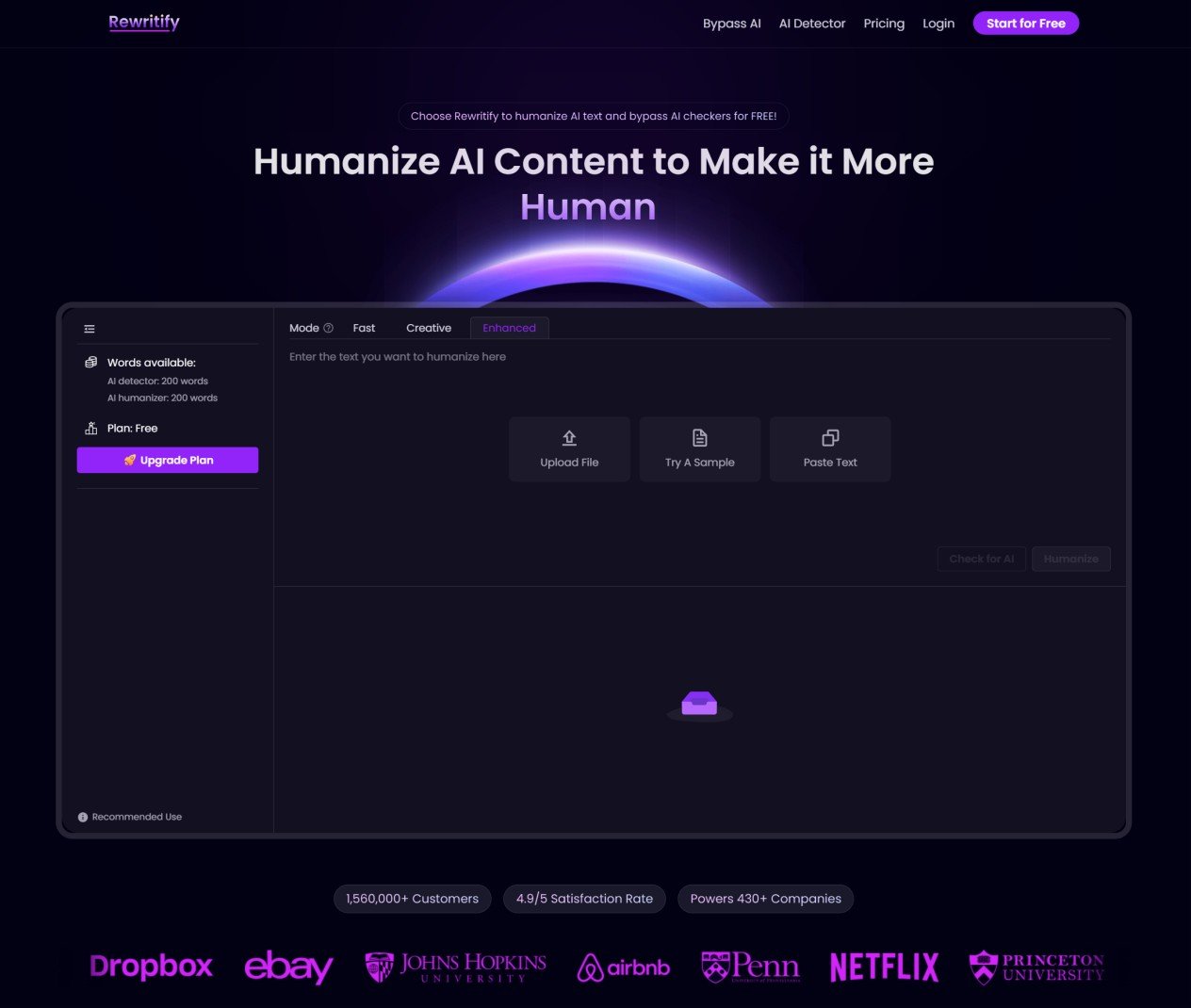
However, for freelance writers, boutique agencies, or startups with tight budgets, investing heavily in enterprise-level software isn’t always feasible right out of the gate. When exploring accessible platforms that successfully bridge this gap, many professionals start by utilizing a free humanize ai-rewritify.ai workflow. By leveraging this specific tier of technology, creators can effectively test how well these advanced algorithms restructure rigid drafts into engaging, organic narratives without having to make an upfront financial commitment. It provides a risk-free environment to elevate your content’s quality and see immediate results.
The Future is Hybrid
True productivity is not about generating the highest volume of words in the shortest amount of time; it is about communicating effectively at scale.
The future of digital storytelling belongs to those who adopt a sophisticated hybrid approach. By using automated tools to build a strong foundational draft, and then applying intelligent refinement platforms to restore the natural cadence of human speech, you can achieve the best of both worlds. Embrace the speed of the machine, but always fiercely protect the soul of your writing.