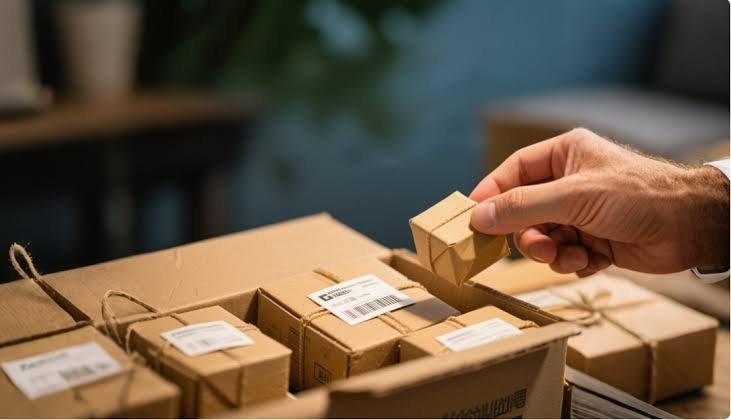
If you’re a small ecommerce business, sourcing from suppliers or making restocking runs to China means you have to work out how to reliably and cheaply send parcels to China.
From the perspective of the Shopify store owner who needs to return an item that doesn’t meet the standards, the Amazon seller who has to communicate with a manufacturer, to the small business owner who deals with supplier relations, shipping to China can seem like a labyrinth of customs paperwork, shipping choices, and erratic delivery schedules.
The positive thing is that after learning the fundamentals, the process is quite less frightening.
The importance of a dependable shipping process for eCommerce sellers:
If there is no issue, many small business owners just think about how to send parcel to China. These moments are lost if there is no repeatable process.
A straightforward, replicable shipping process is cost and stress saving ahead of time, and will help prevent any issues in your supplier relationships when the unexpected shipping occurs.
Finding the appropriate carrier for your business:
There are not all the carriers suited to small e-commerce retailers. International carriers such as DHL, FedEx and UPS provide speed and tracking and are often more costly for smaller items. Postal services like USPS International or your local postal service will be more affordable for lighter packages, but take longer to deliver and less detailed tracking.
Freight Forwarders or consolidators may be able to provide improved rates for sellers who ship often (beyond occasional parcels) by consolidating merchandise.
Understanding Customs Requirements:
China has its own import requirements and common causes of parcel delays or returns are incorrect documentation. Each shipment requires an accurate customs declaration, showing the contents and value of the shipment as well as its purpose (commercial sample, gift, return, etc.).
The common error is to under declare the value to reduce duties and always declare the value is true!
When sending commercial samples or business paperwork, maintain an open paper trail with invoices as Chinese customs officials may ask for supporting documents before clearing a package.
Packaging Hints to Avoid Delays:
Often forgotten is the importance of packaging for small ecommerce businesses on delivery speed. Use strong, properly sized boxes too large of boxes with excess space dimensional weight charges.
The package should be clearly marked with the recipient’s address in Chinese characters (if available) and English as well.
Call the recipient’s phone number once more and email, as many of the couriers in China will need to have a working number to coordinate with the recipient in the last mile.
As a small business, how do you manage costs?
If not managed, shipping costs can take a bite out of margins. Check at least 2 or 3 different carriers for the same route before you make the decision as to which one you choose because the cost can differ between them.
If you’re shipping several parcels each month, ask them about consolidated shipping as it may get you a discount, even if you’re a small business.
Take customs and taxes into consideration at the beginning, as they could be a surprise if your supplier or partner in China has to foot the bill.
Tracking and Communication
After your parcel is shipped, proactive communication with your recipient in China helps avoid confusion. Inform the recipient of the number as soon as it is available and verify the address before shipping, as there are differences in the way addresses are formatted in western countries and China, and this is a common reason for misdelivery.
When a shipment is languishing in customs, it’s often quicker to reach out to the carrier directly with your tracking number and customs declaration information, rather than waiting it out.
Conclusion
Shipping parcels to China doesn’t have to be a guessing game for small e-commerce sellers. When determining what carrier is best for your shipment volume and budget, creating the proper customs paperwork, packing the package well, and maintaining communication with your recipient, you can make an unfamiliar process a part of your business.
Even product samples, returns and business documents can be transported from your warehouse to China with ease with some preparation.