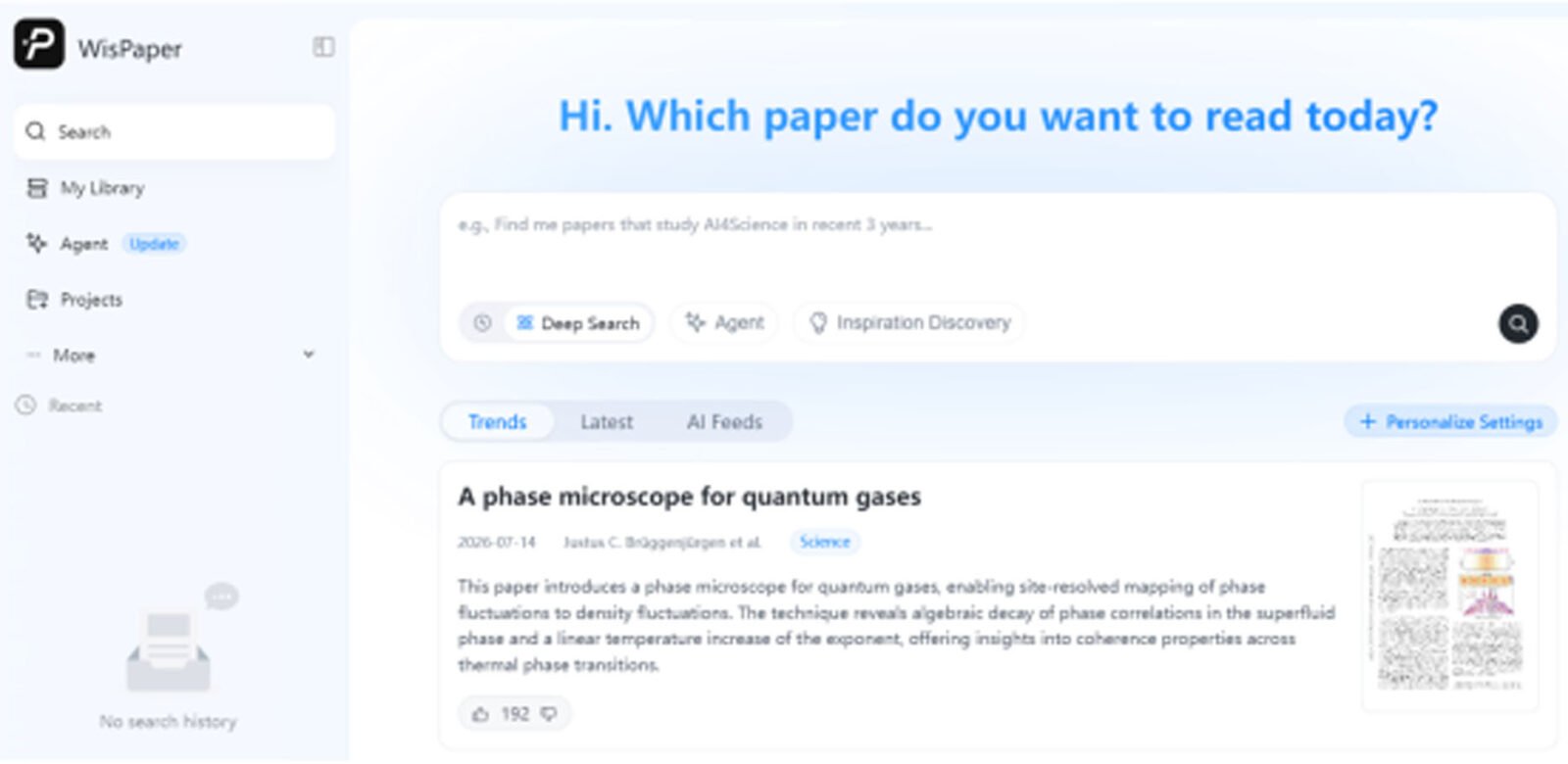
Academic output now exceeds 360 million indexed documents across 32 disciplines, with tens of thousands of new entries indexed daily. Most of this knowledge stays locked behind a language wall. A paper published in Japanese reaches a lab in Berlin only if someone translates it, which almost never happens. WisPaper is treating language as a connection rather than a filter.
The Weight of Language Silos in Academia
A well-cited paper in Mandarin can sit in plain view for years, accumulating citations only within its own language community while parallel English-language work proceeds as if it never existed. These are not separate conversations so much as parallel universes that occasionally discover each other through a translated abstract. Researchers on both sides duplicate effort, not from negligence, but because the infrastructure for crossing linguistic boundaries never materialized.
Demand for Seamless Multilingual Access
Graduate students and early-career researchers feel this most acutely. They are expected to be exhaustive in their literature reviews, yet their search tools default to English and their reading lists rarely stray beyond it. When a supervisor asks whether anyone has published on a niche topic, the honest answer requires checking databases in at least three languages, something no single platform has ever made simple.
Challenges in Non-English Academic Literature
Raw translation only gets you halfway. Academic writing carries domain-specific terminology that general-purpose engines routinely mangle, and a single term can map to multiple meanings depending on context. Then there is the citation chain problem: a paper in a non-English journal may cite sources that only exist in that language. Those citation chains stay invisible to anyone working exclusively in English, and across an index of 360 million documents, the volume of what stays hidden is enormous.
Streamlining Multilingual Research Access
AI-assisted reading tools are starting to address this directly. WisPaper pairs Deep Search with AI Copilot Immersive Reading, which provides full-text bilingual translation between Chinese and English alongside a blog-style easy-reading mode. From there, researchers save papers to My Library, where AI answers questions against a multilingual personal collection.
Globally Inclusive Academic Knowledge
When language stops being a filter on who gets read, the composition of what counts as knowledge shifts. Findings from research communities outside the Anglophone core become visible and citable on their merits rather than their language of publication. What was once a two-tier system of academic visibility starts to flatten.
There is no single moment when academic publishing becomes multilingual. It happens paper by paper, as the tools make it as easy to read a study from São Paulo as one from Cambridge.