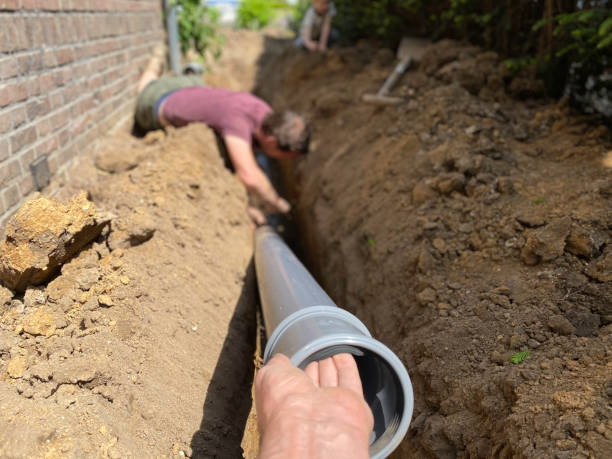
Your home sewer line is responsible for carrying daily wastewater away from your sinks, showers, and toilets safely. This is a crucial pipe that can be easily forgotten about until a significant leak in the house. Knowing the most frequent causes of sewer line damage can help you keep your property safe and new repair costs to a minimum.
Invasive Tree Roots Underground
Root invasion by surrounding trees and shrubs is one of the most common reasons for underground sewer line damage. Plant roots will gravitate towards moisture and heat in the soil. With the passage of time, the thin roots can work their way into a small crevice or pipe joint. After being ingested, they multiply rapidly and form thick webbing inside the pipes, capturing household items in the nutrient-rich wastewater. Chemical cleaners for unclogging the clog on the root are ineffective. Scheduling professional drain and sewer services they offer allows technicians to remove stubborn roots using specialized cutting tools or high-pressure jetting equipment without damaging your fragile underground plumbing lines.
Improper Waste Disposal and Grease Buildup
Many residential sewer backups begin in the kitchen or bathroom. Cooking grease, fats, and oils are a significant source of problems if they are poured down the sink drain. When the liquid grease cools in the pipes, it turns into a thickened sludge that clogs debris particles as they pass through. Likewise, wet wipes, sanitary napkins, and paper towels can cause clogs when thrown in the toilet. Flushables will not dissolve rapidly in water; even flushable ones are not like regular toilet paper. Preventing these clogs requires throwing all food scraps, cooking grease, and hygiene products into the trash can instead of washing them down the plumbing drain.
Aging and Corroded Pipeline Materials
All things change, and underground sewer lines in residential buildings are no different. A lot of older homes have clay, cast iron, or Orangeburg pipes. These older materials tend to corrode, rust and crack naturally over the course of decades, depending on the extent of the ground pressure. Recently developed plastic pipes are also liable to buckle or crack if the soil around them moves due to heavy rains or foundation settling. If pipes begin to crack or fail, water starts to flow into your property and results in continuous backup inside the home. Burst pipes cause significant water damage and will cause many problems if they are not replaced or relined before they finally break.
Proactive Maintenance and Camera Inspections
Severe sewer line emergencies can be avoided with preventative maintenance. Avoid backups from wastewater into your shower by having routine visits with a licensed plumber for maintenance. The modern solution for cleaning the inside of underground pipes uses flexible cables equipped with a high-resolution video camera that is used to check the inside of your pipes. Real-time camera inspection shows root intrusion, grease accumulation, sagging pipe sections, and hairline cracks. Catching these hidden problems early allows you to schedule targeted drain cleaning or minor spot repairs before a complete and disastrous sewer line failure ever occurs on your property.
Conclusion
Fortunately, most sewer line problems are preventable; however, they can lead to stressful sewer backups in homes and costly property damage. Properly observing the items going down your drains, keeping an eye on tree growth, and investing in regular plumbing inspections will keep your underground plumbing running smoothly. If you have any warning signs, get in touch with a trusted local plumbing expert right away to save your home.